Neurotransmitters Are Molecules That Cross the Synaptic Cleft and
A chemical synapse is a type of synapse in which nervous signal is transmitted from one neuron to the other through the chemicals that are released in the synaptic cleft. They then bind to receptors embedded in the membrane of the postsynaptic cell.
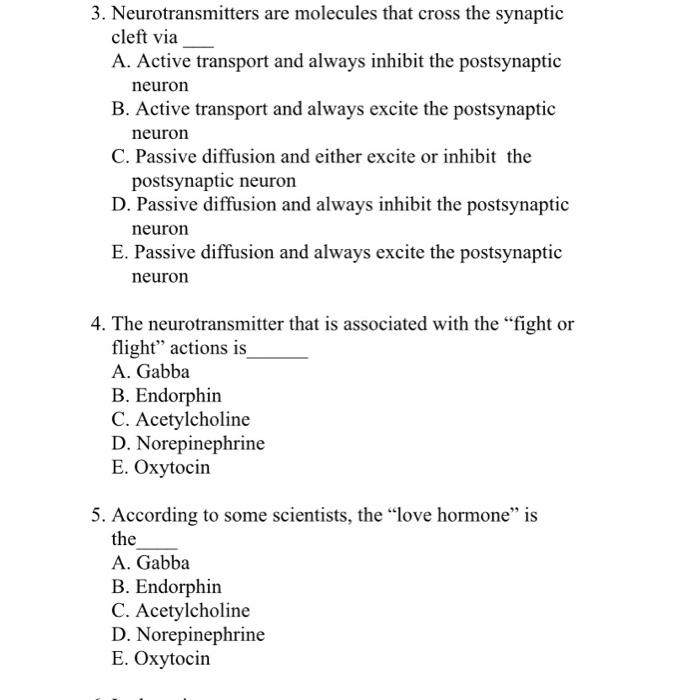
Solved 3 Neurotransmitters Are Molecules That Cross The Chegg Com
Neurotransmitters then cross the synapses where they can.
. Neurotransmitters are released into the synaptic cleft. Integrate the pre-synaptic action potential. In these vesicles they await the signal for their release into the synaptic cleft.
Figure 1 shows the diffusion process of neurotransmitter in synapse. Which of the following is a part of the synapse or synaptic gap. Neurotransmitters are extremely important because they are the agents of chemical signaling between neurons.
Select the answer that correctly orders the events that occur when a nerve signal reaches the axon terminal. Neurotransmitters are molecules that cross the synaptic cleft and. Specific neurotransmitters binds to their own receptors in the post synaptic cleft and the binding action causes ion channels open thus leading to a change in membrane potential.
Neurotransmitter molecules simply diffuse across the synaptic cleft. This is particularly true for the role that diffusion of neurotransmitters across the synaptic cleft plays in this process. Chemical products called neurotransmitters are released from a neuron to the terminal of the prenaptic nerve.
The neurotransmitters are contained within small sacs called synaptic vesicles and are released into the synaptic cleft by exocytosis. Neurotransmitters are molecules that cross the synaptic cleft and. These chemicals are called neurotransmitters.
Neurotransmitter molecules cross the synaptic cleft and bind to receptors known as ligand-gated ion channels LGICs and G-proteincoupled receptors GPCRs on the postsynaptic neuron. Neurotransmitters are released into the synaptic cleft what happens when the neurotransmitters cross the synaptic cleft neurotransmitters then bind to the receptors on the postsynaptic membrane which open ion channels and allow an influx of ions into the post synaptic cells that either generates an inhibitory or excitatory graded potential in the postsynaptic cell. Ca2 causes exocytosis of synaptic vesicles.
Combined with rapid deactivation of synaptic receptors such as AMPA-type glutamate receptors this allows particular synapses to operate at an exceptionally high frequency. The steps of transmission across a synapse are the following. Communication of information between neurons is accomplished through movement of chemicals through a small gap called synapses.
If it takes an amount of time T for neurotransmitter molecules to cross the synaptic cleft between. The neurotransmitters diffuse across the synaptic cleft and bind to transmitted-gated ion channel receptors on the postsynaptic membrane. First by diffusing away from activated receptors neurotransmitter molecules ensure rapid decay of synaptic signals and minimum levels of receptor desensitisation.
Question 6 1 pts The propagation of a nerve impulse occurs in part by the movement of neurotransmitter molecules across the gap between nerve cells known as the synaptic cleft. In addition small-molecule transmitters do most of the work and include GABA acetylcholine dopamine and more. Always inhibit the postsynaptic neuron.
On the other hand neurotransmitters are limited to. Neurotransmitters are molecules that cross the synaptic cleft and. 2 The postsynaptic cell is stimulated to initiate a nerve signal.
Action potential arrives at the axon terminal. Ca2 diffuses into the presynaptic cell. Neurotransmitters are too big to cross the blood brain barrier so they are created within neuron axon terminals and stored in vesicles at these terminals.
The movement of these molecules can be treated as one. Most neurotransmitter molecules get released from axon terminals and the cross the synaptic cleft through diffusion. Another important consequence of.
Transmissio passage crossing from transmittere send let through is the process by which signaling molecules called neurotransmitters are released by the axon terminal of a neuron the presynaptic neuron and bind to and react with the receptors on the dendrites of another neuron the. When the nerve impulse reaches the dendrites at the end of the axon chemical messengers called neurotransmitters are released. An electrical nerve impulse travels along the axon of the first neuron presynaptic neuron.
The molecules diffuse across cleft and on the dendritic membrane there are specific receptors for neurotransmitters. GPCRs on the presynaptic neurons axon terminal alter the function of voltage-gated ion channels and modulate neurotransmitter release. A and D are correct.
Neurotransmitters do not directly excite or inhibit action potentials per se. The chemicals bind with. The elucidation of the principal features of chemical synaptic transmission has been one of the great achievements in the history of neuroscience yet students have significant difficulties developing a deeper understanding of the underlying concept.
At a chemical synapse one neuron releases neurotransmitter molecules into a small space the synaptic cleft that is adjacent to another neuron. Always excite the postsynaptic neuron. 1 The neurotransmitters bind to receptors on the postsynaptic cell.
Hormones control growth development and reproduction. Neurotransmitters are synthesized and released from the nerve ending into the synaptic cleft and then they bind to receptor proteins in the cellular membrane of the target tissue. Neurotransmitters cross only the synaptic cleft to reach the target while hormones must travel through part of the bloodstream.
Synaptic cleft is essential for the transmission of nerve impulses from one neuron to the other in case of a chemical synapse. Well that information is now going to be converted into the amount and duration that neurotransmitter is present in the synaptic cleft and the way that that happens is that an increase frequency of action potentials reaching the axon terminal will cause more openings of these voltage gated calcium channels so they usually more calcium will flow into the axon terminal. Neurotransmitters are secreted by secretory vesicles present in axonic end.
A synapse is a junction or space between two neurons or a neuron and a receptor which allows the transmssions of an electrical or chemical signals to another cell. These chemicals diffuse across the synaptic cleft. Synaptic vesicle to open and release neurotransmitters which diffuse into the cleft.
Either excite or inhibit the postsynaptic neuron.

Neurotransmitters Msrblog
What Must A Neurotransmitter Cross In Order To Excite Or Inhibit An Action Potential In A Receiving Neuron Quora
4 Released Neurotransmitter Molecules Diffuse Across The Synaptic Download Scientific Diagram

Comments
Post a Comment